
Formats5 min
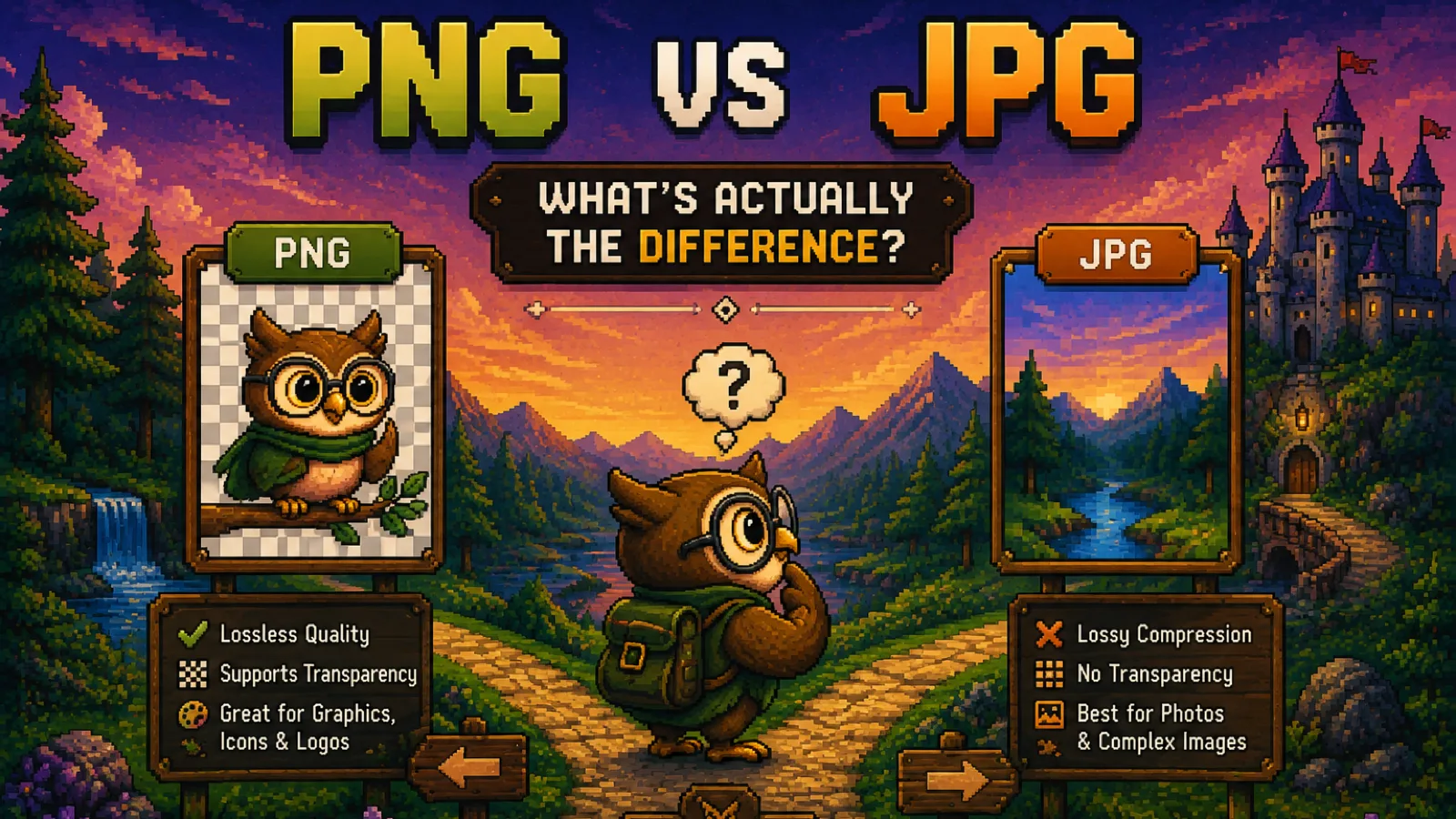
PNG vs JPG: What's Actually the Difference?
PNG vs JPG explained: lossless vs lossy, transparency, file size, and a simple rule for when to use PNG and when JPG is the better pick.
Plain-English explainers for the file formats you run into every day: what they are, why they exist, which one to pick, and how to convert between them.
PNG vs JPG explained: lossless vs lossy, transparency, file size, and a simple rule for when to use PNG and when JPG is the better pick.
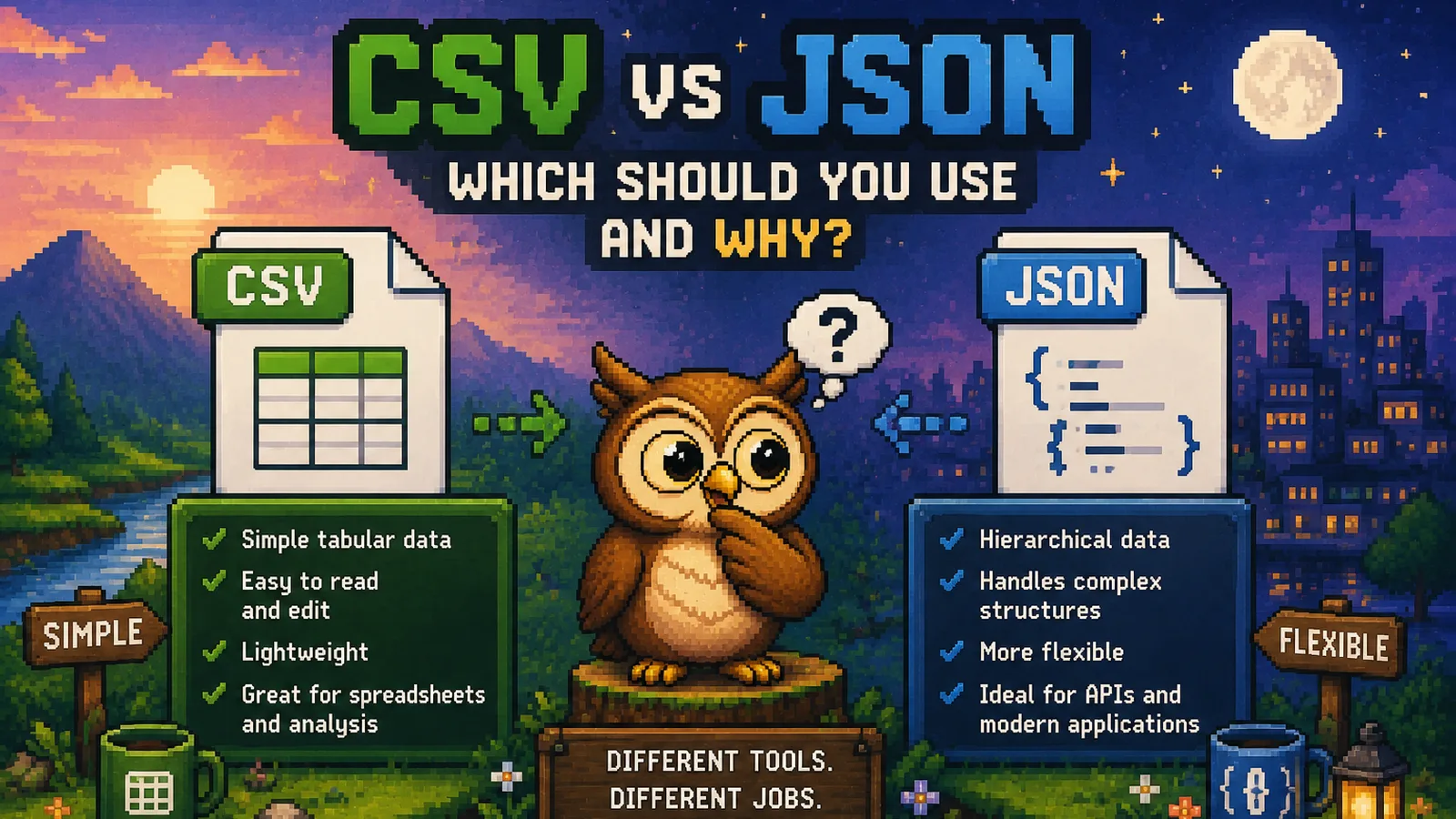
A plain-English comparison of CSV and JSON: structure, readability, and when each format is actually the right choice for your data.
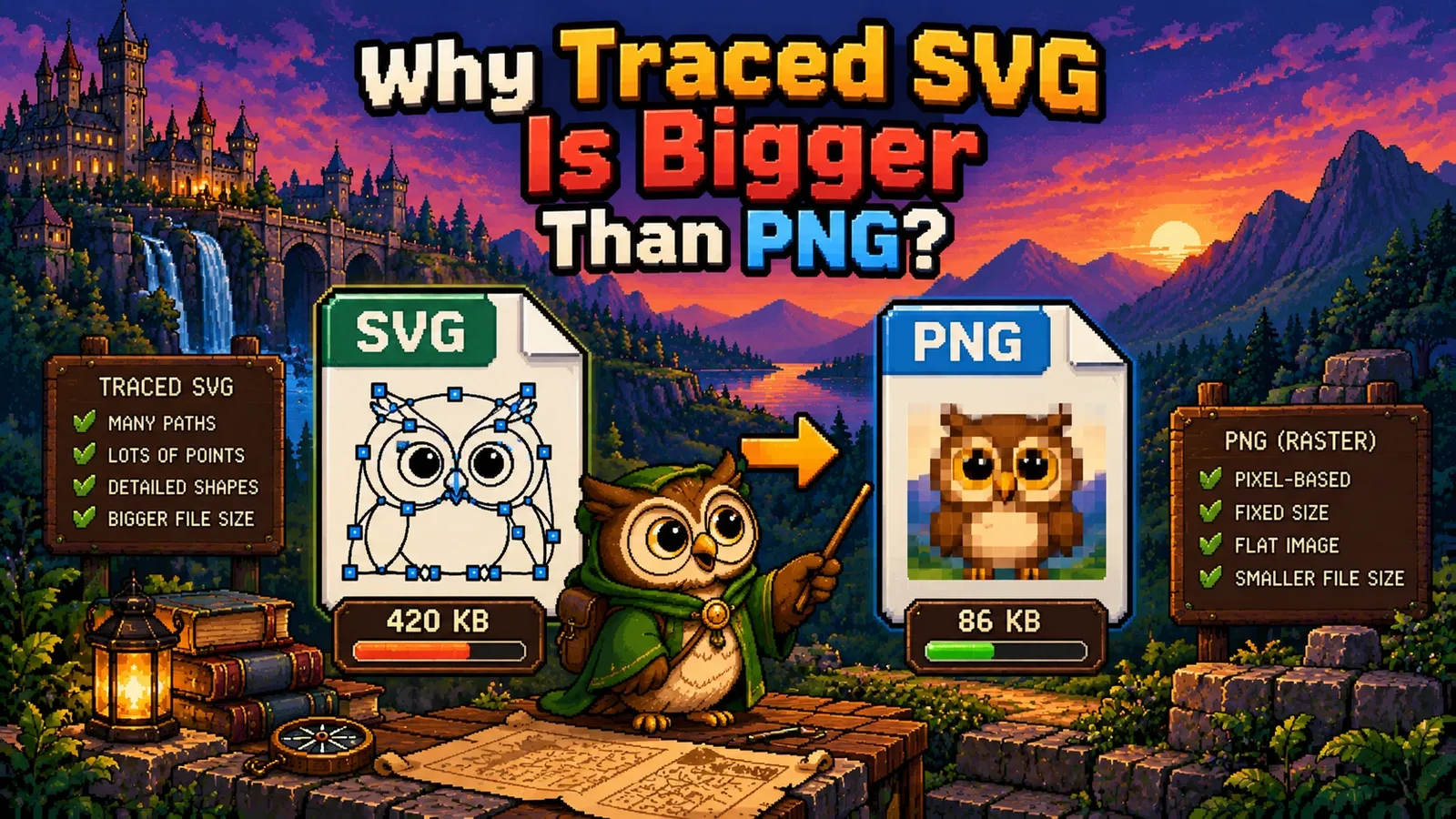
Tracing does not un-rasterize an image. Here is what it actually does, why photos come out ten times larger, and when it genuinely works.
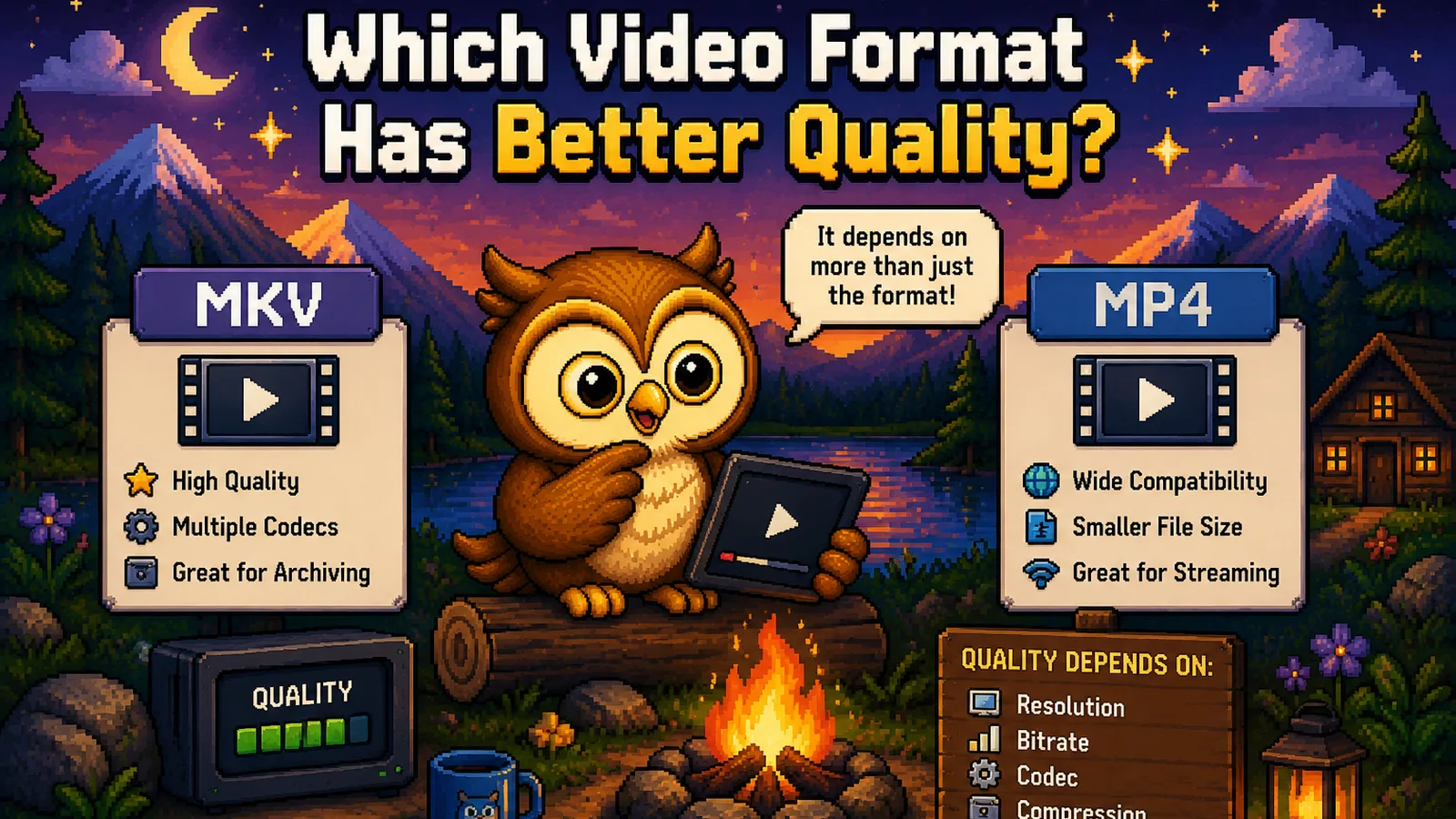
MP4, MOV, WebM, and MKV compared on actual visual quality: codec, bitrate, and resolution, not just compatibility. Here's what really matters.
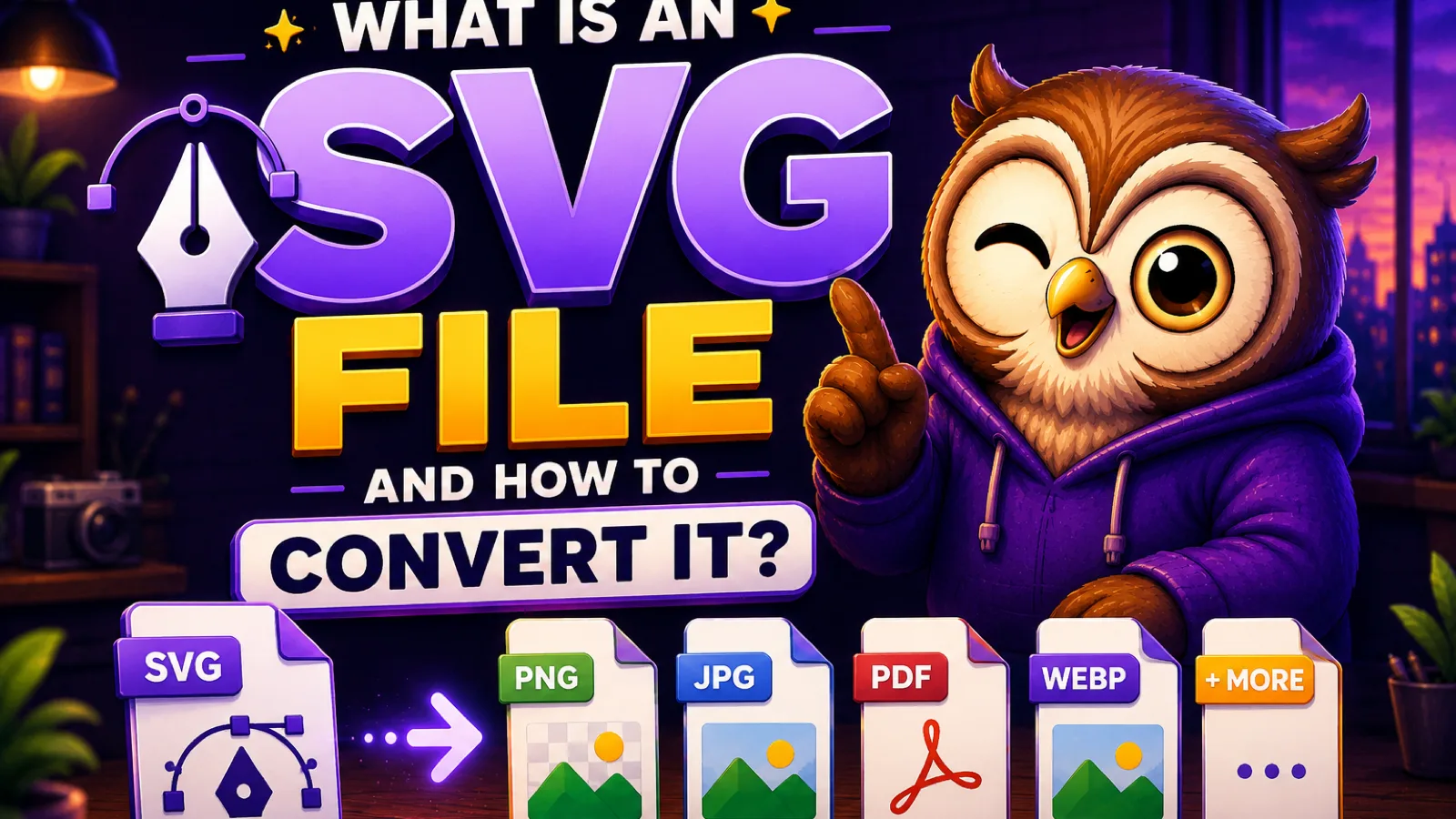
SVG is a scalable vector image built from code, not pixels, which is why logos and icons use it. Here's how it works and how to convert one to PNG.
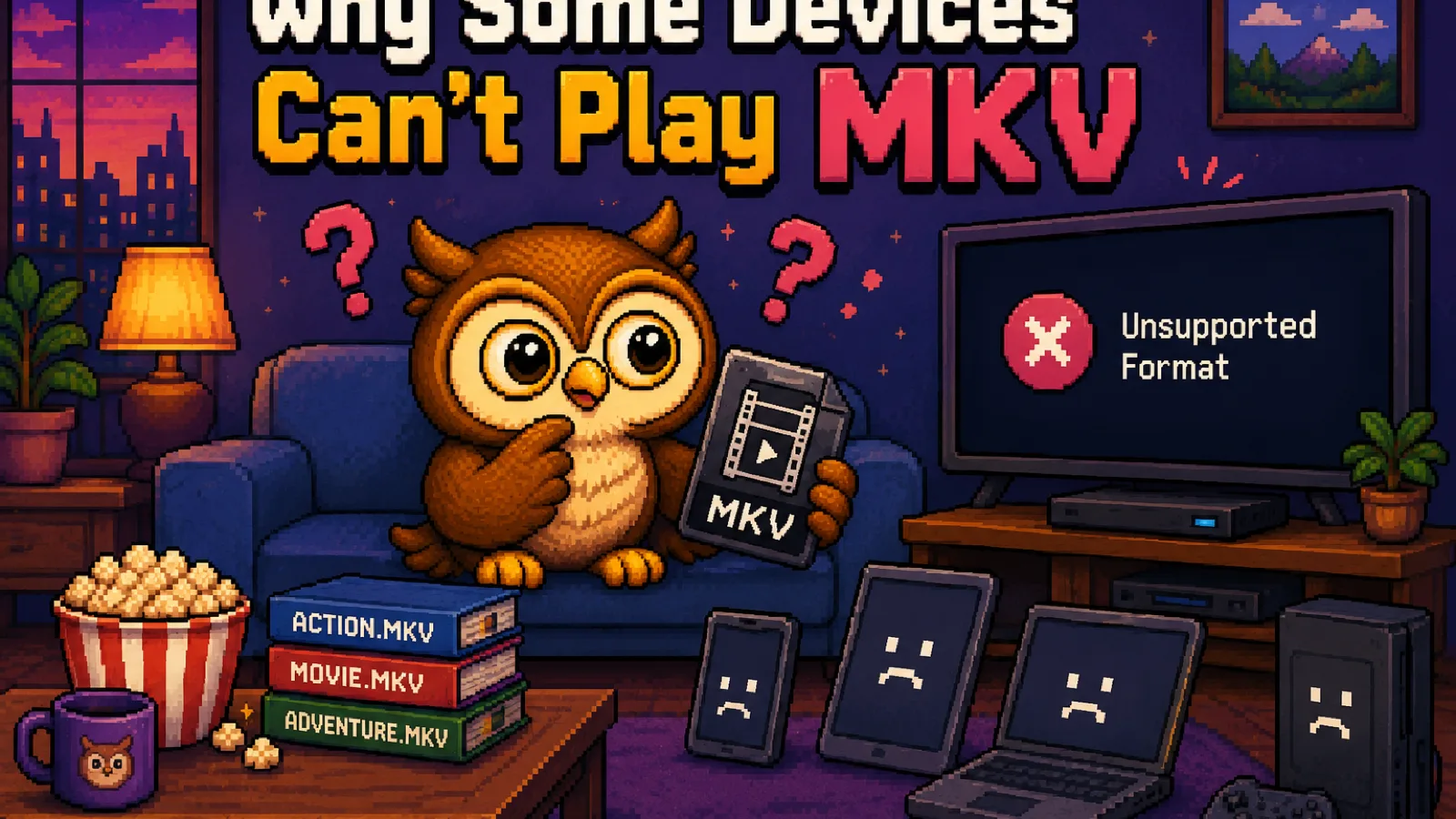
MKV files fail to play on phones, TVs, and some apps because of the container, not the video. Here's why, and how to fix it in seconds.
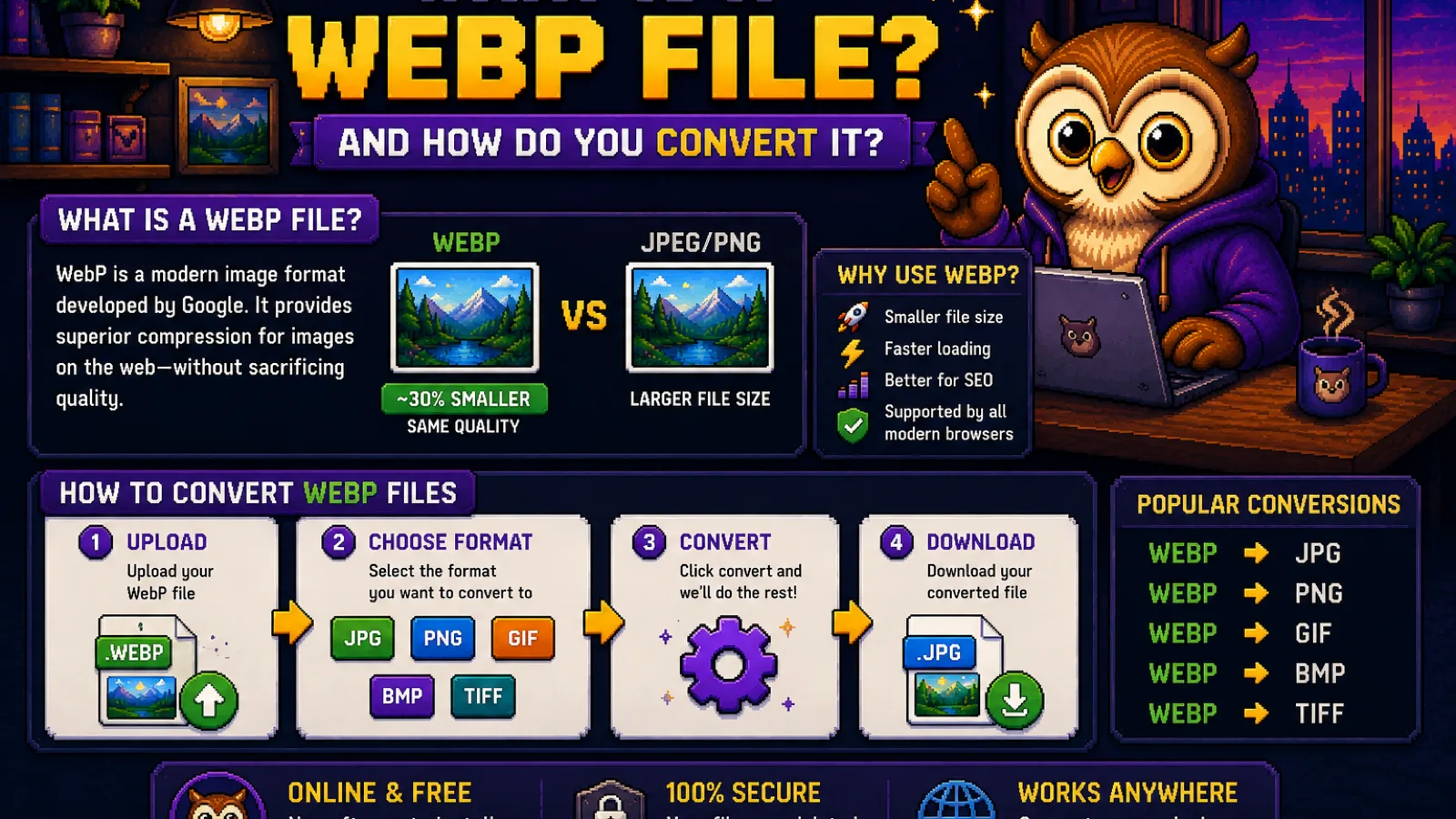
WebP is Google's image format built for the web: smaller files than JPG or PNG, transparency, even animation. Here's how it works and how to open it.
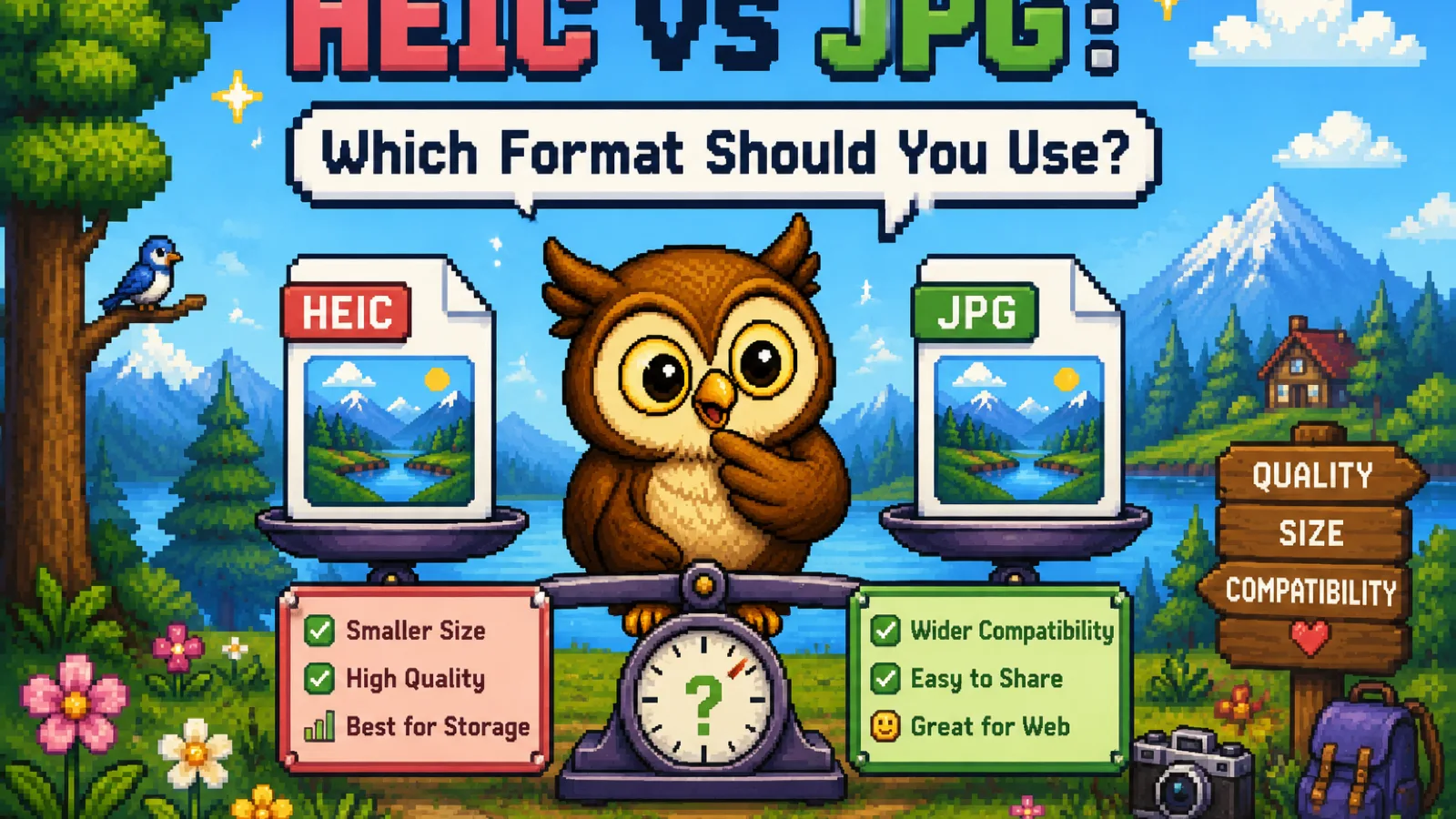
HEIC and JPG compared on quality, file size, and compatibility, so you know when to keep HEIC and when to convert to JPG.
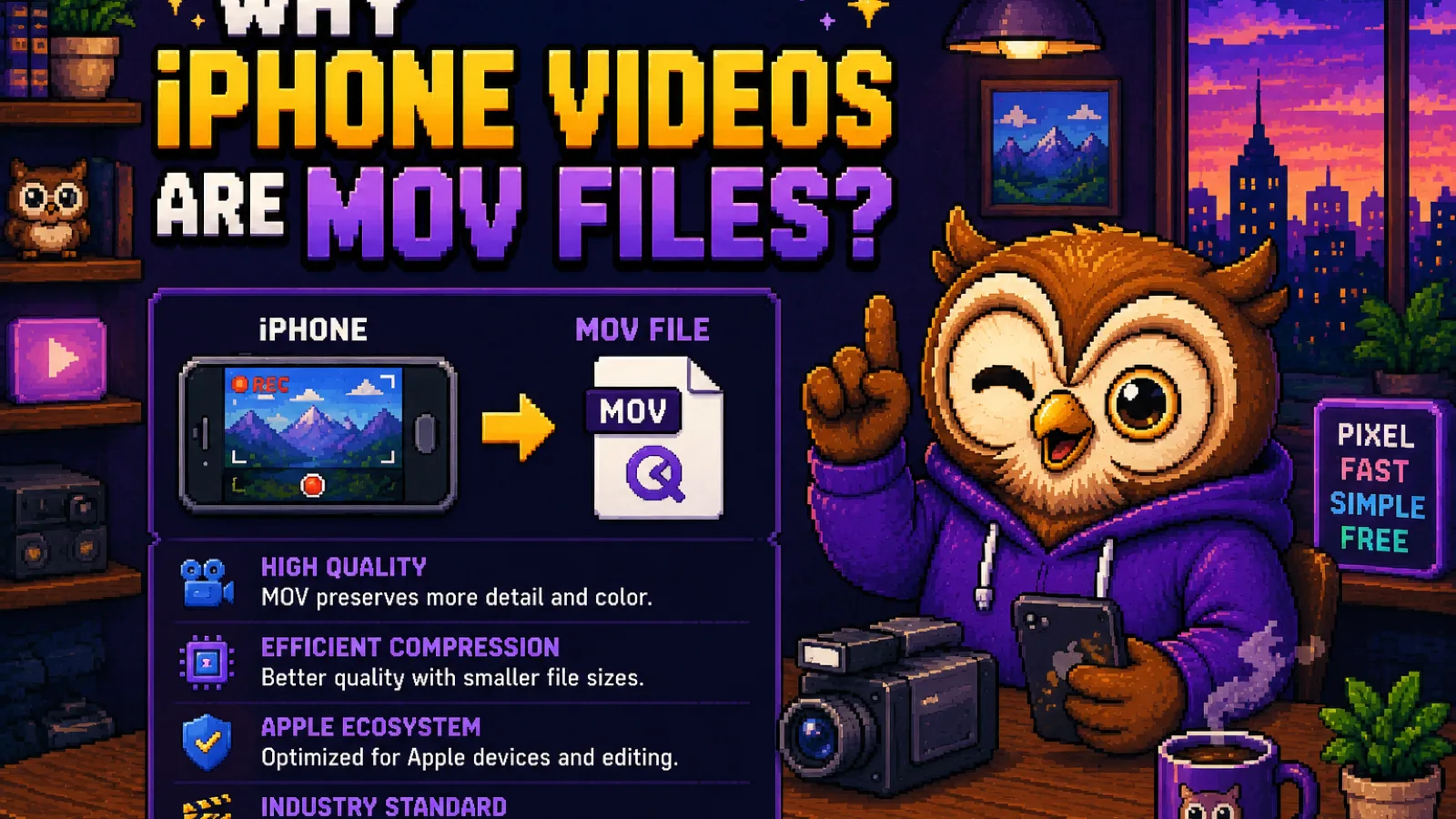
iPhones record video as MOV because of Apple's QuickTime format. Here's why, what it means for compatibility, and how to fix it in seconds.
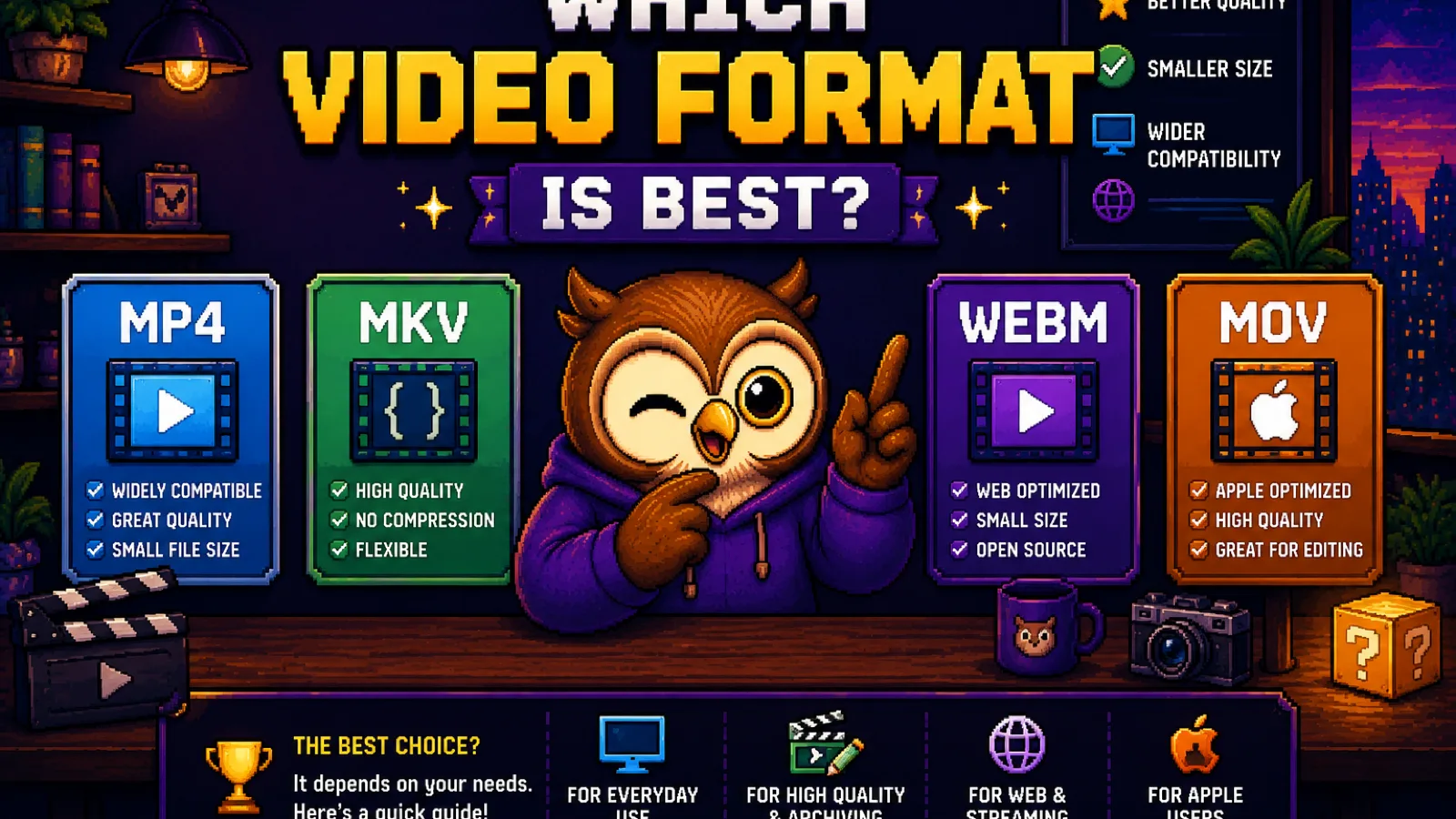
MP4, MOV, WebM, and MKV compared for compatibility, file size, and quality, with a clear answer for which one to actually use.

MP3, FLAC, and WAV compared for music: file size, sound quality, and which one to actually use for listening, archiving, or editing.